
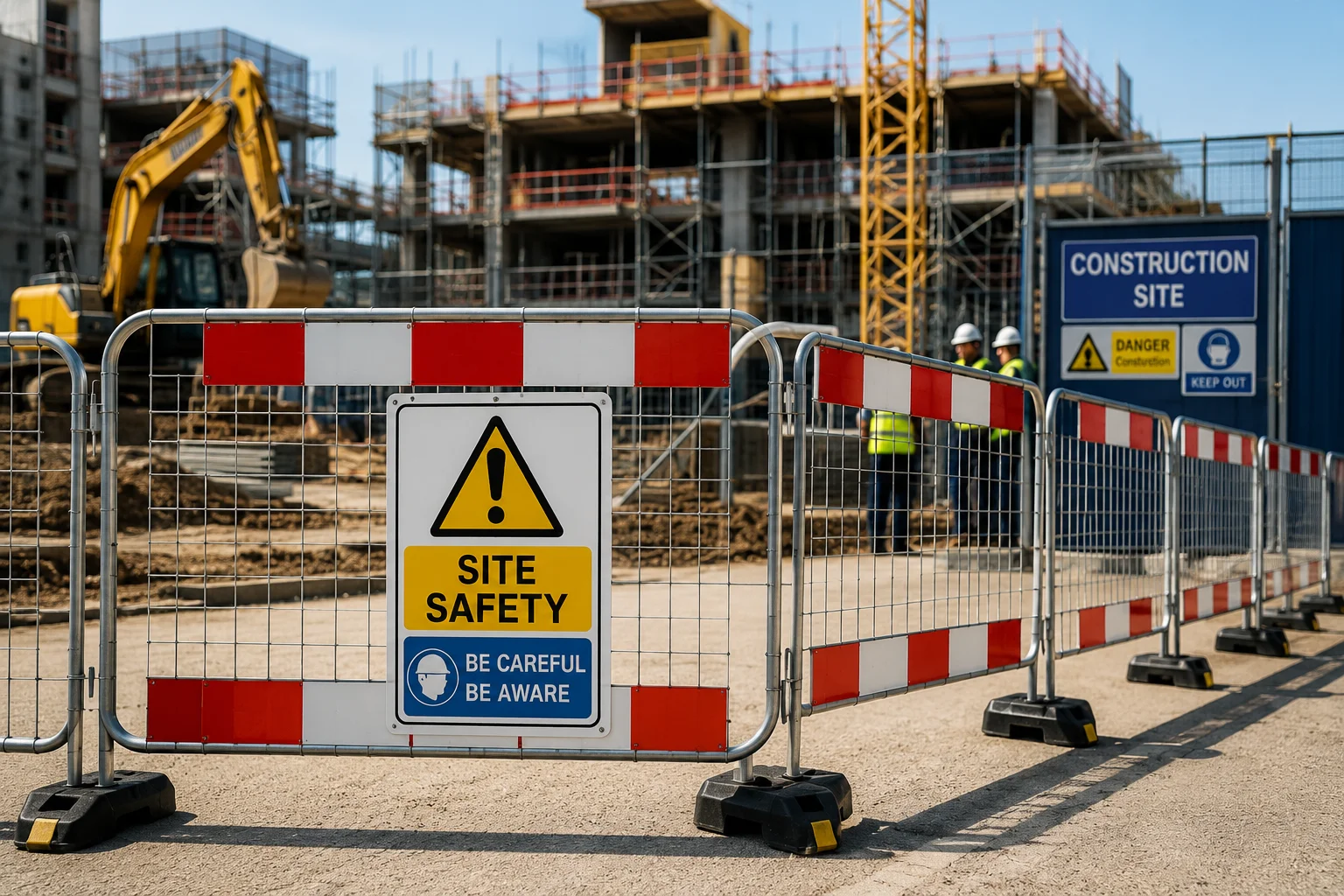
Safety and organisation are essential wherever people, vehicles, equipment, and visitors share the same environment. Construction areas, industrial facilities, public venues, commercial properties, and temporary work zones can become challenging to manage without clear boundaries. Site barriers offer a simple and practical way to control movement, identify restricted areas, and create safer routes. Queue Tech provides barrier solutions that can help organisations improve site management while maintaining a professional and organised appearance.
Understanding the Role of Site Barriers
A barrier does more than physically separate one area from another. It also provides a visual indication that tells people where they should and should not go. In busy environments, this simple form of guidance can reduce confusion and support better movement.
Site barriers can be used around work areas, entrances, equipment, pedestrian routes, and restricted sections. Their flexibility makes them useful for both permanent operational environments and temporary activities.
Supporting Construction Site Safety
Construction environments can change from one day to the next. Workers may be operating machinery, moving materials, repairing structures, or completing installation work in areas where visitors could accidentally enter.
Barriers help create a clear division around active work zones. By establishing a visible boundary, they can help keep pedestrians away from potentially hazardous activities and guide them toward safer paths.
Better Control During Maintenance Work
Maintenance tasks often require temporary restrictions. A business may need to close a section of flooring, isolate machinery, or prevent access to an area while repairs are being completed.
Using site barriers allows organisations to create temporary boundaries without permanently changing the layout. Once the work is complete, the barriers can be moved or removed, making them particularly useful for facilities with changing requirements.
Managing Public Areas More Effectively
Public-facing locations need to balance safety with convenience. Visitors should be able to understand where they need to go without feeling confused by complicated layouts.
Barriers can help divide public areas from staff-only spaces, maintenance zones, service points, or operational sections. A clearly planned layout can make a facility easier to navigate while helping employees maintain better control over movement.
Organising Queues and Waiting Areas
Crowded waiting areas can quickly become disorganised when there are no clear routes. This can happen at public venues, service centres, transport facilities, retail environments, and event entrances.
Barriers can create defined waiting lanes and guide visitors toward service points. They can also prevent queues from spreading into walkways or other operational areas. Queue Tech combines queue management knowledge with practical barrier solutions to support smoother customer movement.
Improving Pedestrian and Vehicle Separation
In warehouses and industrial locations, vehicles may regularly move between loading zones, storage areas, and operational spaces. Employees and visitors may also need to walk through these environments.
Creating clear pedestrian routes with suitable barriers can make the layout easier to understand. Separating walking areas from vehicle routes can support safer movement and improve overall workplace organisation.
Protecting Equipment and Operational Areas
Expensive machinery, technical equipment, stock, and workplace materials may need protection from unnecessary contact. Allowing unrestricted access can increase the possibility of accidental damage or disruption.
Strategically positioned barriers can establish a protective zone around important equipment. This can help employees identify operational boundaries while discouraging unnecessary access.
Creating a Professional Site Appearance
Safety measures do not have to make an environment look unprofessional. Well-designed barriers can contribute to a cleaner and more structured appearance when they are placed thoughtfully.
For customer-facing businesses, this is particularly important. A tidy layout can make visitors feel more comfortable while demonstrating that the organisation takes safety and crowd management seriously.
Selecting Suitable Site Barriers
Different environments require different barrier solutions. Before selecting a system, organisations should consider the location, expected traffic, required level of restriction, frequency of repositioning, and available space.
Portability can be especially valuable for temporary applications, while durability may be a priority for demanding workplace environments. Choosing a suitable solution ensures that the barrier supports both practical and operational requirements.
How Queue Tech Can Help
Queue Tech provides solutions for organisations looking to improve pedestrian flow, access control, and site organisation. Its barrier systems can support a wide range of applications, from temporary work areas to busy public environments.
With effective planning and appropriate equipment, businesses can create clearer routes, protect restricted spaces, and manage visitor movement more efficiently.
Conclusion
Site barriers provide a straightforward way to improve safety, access control, pedestrian flow, and workplace organisation. They can be used in construction areas, maintenance zones, industrial facilities, events, commercial spaces, and public environments. By creating visible boundaries and directing people toward appropriate routes, organisations can make their spaces easier to manage. Queue Tech offers practical solutions that help businesses create controlled, organised, and professional environments suited to their changing operational needs.
